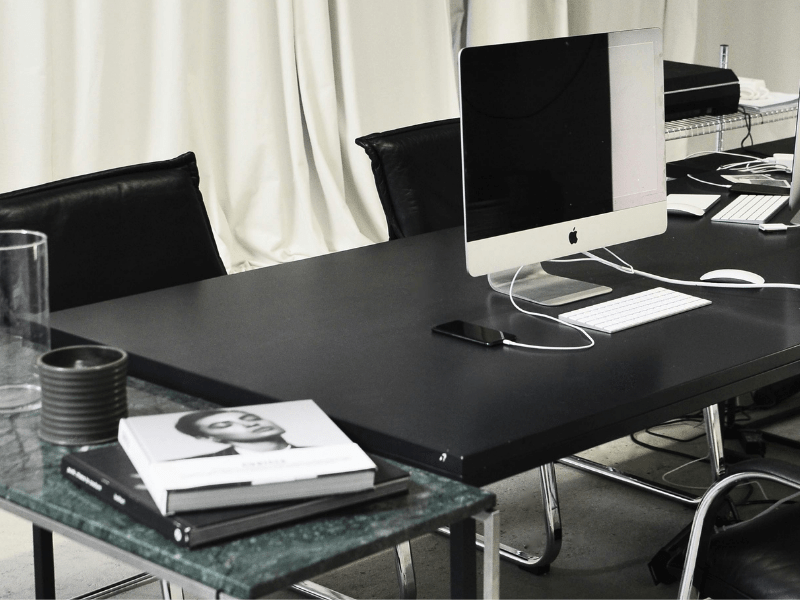
Imagine a boardroom where the CEO quietly takes a breath before making a major decision. It sounds unlikely in today’s high-speed business world – yet leaders like Ray Dalio credit meditation for their success. Dalio, founder of the world’s largest hedge fund, says daily meditation gives him “calmness and equanimity” that he calls key to his clear decision-making. This essay explores how the classical yoga notion of stillness – far from being mere relaxation – can translate into sharper focus and better decisions today. By tracing the idea from ancient texts through modern psychology and real-world examples, we see that stillness is an active clarity, not passivity, and that even brief mindful pauses can untangle complex choices.
The Ancient Foundation:
Stillness in Yoga Philosophy

In the Yoga Sūtras of Patañjali (circa 2nd century CE), yoga is defined as “citta-vṛtti-nirodhaḥ”, literally the cessation of the mind’s fluctuations. In practical terms this means quieting the usual chatter of thoughts and emotions so that awareness can rest undistorted. One commentator captures it vividly: “Yoga is the stilling of the mind until it rests in a state of total and utter tranquility, so that one experiences life as it is: as Reality”. In other words, when mental ripples subside, we see the world clearly through “lenses not colored by thoughts of good or bad”. Classical texts do not demand an empty mind – rather, they advocate a stable awareness that watches thoughts without being swept along. As a modern yoga scholar notes, the goal is “not to stop thoughts from arising. It is to no longer be carried away by them.”.
Yogic tradition further teaches that this inner stillness is active. It is not dullness or withdrawal, but a clear, alert calm. One well-known commentary says a settled mind “perceives more accurately, reacts less impulsively, [and] recovers more quickly from disturbance”. In classical practice (with postures, breath work, and meditation), practitioners cultivate this poised attention. When achieved, even the traditional sages remind us, it carries into daily action: a wise person acts decisively without anger or confusion. In this sense yoga is about integration, not escape – the stillness “travels with the practitioner into action.”. Seen this way, the roots of our question are clear: ancient yoga envisions a mind so steady and clear that decisions naturally reflect reality rather than bias.
Philosophical Depth: Witness and Insight
Yoga’s teachings on stillness go deeper than just quieting thoughts. The practitioner is encouraged to develop a witness-consciousness: an observing presence that notes each thought or feeling as it rises and falls. In this light, stillness is a shift in relationship with the mind. Instead of identifying “I am this thought”, one simply sees the thought as separate. Over time, this detachment grants insight. The mind becomes like a calm lake reflecting truth, rather than a storm-tossed sea.
This insight has an important corollary: action arising from stillness can be more skillful. For example, the Bhagavad Gītā (a core Indian text) teaches the ideal of the “sthita-prajña” – one whose intellect is steady and who acts wisely in the world. In yoga philosophy this steady wisdom comes from inner stillness. A yogic maxim might be paraphrased as: Do your duty with a calm mind, neither elated nor despairing. When thoughts and emotions are not overly controlling us, our choices reflect discernment (the Sanskrit viveka, or keen discrimination). In practical terms, a still mind naturally follows the ethical precepts of yoga (honesty, patience, compassion) without strain. As one teacher observes, true stillness “in classical yoga…reflects clarity and steadiness, not dullness or withdrawal.”.
Put simply, ancient yogis argued that clarity arises from calm. When the mind is silent enough, our inner wisdom shines through. Actions born of that wisdom are measured, thoughtful, and harmonious. That vision – of decisions emerging from calm clarity – may feel like a fresh insight in today’s business world, but it has millennia of pedigree in yoga philosophy.
The Psychology of Stillness: Mindfulness and Decisions
Modern science has begun to confirm what ancient yogis taught. Research on mindfulness (secular stillness practices) shows that quieting habitual thought patterns improves decision-making. For instance, a Wharton School study found that participants who took a brief 15-minute guided-breathing meditation were better at overcoming the “sunk-cost bias” – the tendency to throw good money after bad – than those who did not meditate. The meditators were “more likely to resist the sunk-cost bias”, focusing less on past investments and feeling fewer negative emotions, which helped them choose more rationally. In practical terms, the study’s lead researcher noted: meditation simply shifts attention away from worries about past or future, “which led to [people] experiencing less negative emotion” and thus making clearer decisions.
In fact, one report bluntly summarized the advice: “Forget the past. Ignore the likely future. Just spend a few minutes concentrating on your breathing, and focus on the task at hand.” According to Wharton, this can “save time and money for everyone – from a consumer searching for a new car all the way to the head of a billion-dollar corporation.”. Even very short mindfulness breaks have measurable effects. In laboratory experiments, just minutes of focused breathing improved people’s ability to consider current information objectively. A study published in Psychological Science showed that meditation weakened the brain’s tendency to ruminate on past losses or future worries (often called the “default mode”network). By drawing attention back to the present moment and reducing negative mood, meditation directly attenuated decision biases like the sunk-cost fallacy. In other words, a calm mind is a less biased mind.
The benefits extend to emotional regulation and creativity as well. Mindfulness training has been found to reduce negativity bias (the habit of over-weighting bad news) and boost optimistic, flexible thinking. It also enhances emotional intelligence – leaders become more aware of their own feelings and better at empathizing. One business review even noted that after an 8-week mindfulness program, managers showed about 29% higher emotional intelligence scores. These skills – seeing things clearly, feeling less hijacked by anxiety, and listening actively – translate into better decisions and more adaptive problem-solving. In short, the ancient practice of inner stillness finds an echo in modern neuroscience and psychology: by quieting the automatic mind, we make room for thoughtful, well-informed choices.
Stillness at Work: Real-World Examples
If stillness sounds abstract, consider how it appears in business practice. Take Ray Dalio: he meditated twice daily for decades, describing each 20-minute session as a “20-minute vacation” that “calms him down and helps him make better decisions.”. For Dalio, the payoff was concrete – he attributes his success more to meditating than to anything else. Investors and CEOs the world over have taken note: Dalio isn’t the only billionaire who swears by meditation. (Virgin’s Richard Branson, for example, even led an in-flight meditation session at 30,000 feet!). The practice is spreading beyond individuals to companies as a whole.
One of the most famous case studies is health insurer Aetna. When CEO Mark Bertolini introduced yoga and meditation programs for employees, the results were startling. Participants reported 28% less stress, better sleep, and less pain on average. Even more impressively for business decision-makers, Aetna calculated that these changes made each employee “more effective at work”, worth about $3,000 per person per year in productivity gains. Healthcare costs stabilized 3% below previous trends. In Bertolini’s words, meditation became “a business strategy, not just a wellness perk”. Other companies (from Google to General Mills) now offer regular mindfulness training to teams, reporting higher engagement, creativity, and retention.
In everyday modern life, stillness might take the form of a brief walking meditation between meetings, a few minutes of breathing before negotiating a deal, or even stepping out of an office to sit quietly. A Wharton researcher points out that even as you stand in line or drive to work, a conscious pause can help: “If you find yourself in a position where you need to change the way you’re thinking and be sure you’re thinking in a less biased way … meditation is a way to do that.”. In short, the corporate world is experimenting and finding that the ancient yoga prescription – making space for stillness – can actually sharpen its edge in competitive environments.
Misconceptions and Modern Tensions
Despite this evidence, many misunderstand stillness. A common myth is that yoga-style stillness means withdrawal or weakness. In fact, yoga philosophy argues the opposite: true stillness is power. One commentator notes that authentic meditation leads not to detachment from life but to greater engagement and balance. In other words, stillness is not about laziness or escapism, but about clarity. Far from discouraging action, a calm mind can act more wisely and energetically. Another classical insight: stillness is portable – once cultivated, it stays with you in action.
A modern tension is that our culture equates activity with value. We often see pauses as “unproductive” or even lazy. But yoga challenges this assumption. It teaches that when the mind is like a clear mirror, decisions reflect reality better. In the frantic pace of meeting-driven offices and 24/7 connectivity, that idea can seem foreign. Yet even neuroscience is catching up: studies of the brain’s default mode network (active during idle thinking) show meditation quiets it, allowing the task-positive network (focused attention) to function properly. In practice, this means a decision made from a tranquil, alert mind is often the smarter one.
Another misconception is that you need hours of silent retreat to benefit. Not so. Research shows even brief “time-outs” help. As one Wharton article puts it: “Everyone always says ‘stop being emotional’ when they discuss decision-making… but in essence that’s the wrong thing to say. Just don’t let the wrong emotions cloud the decision-making process.” A short breathing break can do exactly that – giving the wrong emotions less influence. So even though boardrooms may prize instant answers, a few moments of stillness can actually clear the path to those answers.
Key Takeaways
- Stillness (Yoga) ≠ Blank Mind. Classical yoga defines stillness as “settling the fluctuations of the mind,” leading to clear awareness. It’s not about never thinking, but about no longer being carried away by thoughts.
- Active Calm. Yoga emphasizes that a still mind “perceives more accurately, reacts less impulsively, [and] recovers more quickly”. In other words, inner calm is an active condition that sharpens judgment, not passivity or disengagement.
- Modern Evidence. Psychology research shows that mindfulness (short meditation) literally shifts attention away from past/future worries, reducing biases. Studies found just minutes of breathing-focused meditation help people resist irrational “sunk-cost” thinking and weigh information more fairly.
- Business Impact. Many leaders and companies see tangible results. For example, Ray Dalio credits daily meditation for his “clearer mind” and better decisions, while Aetna reports saving ~$3,000 per employee per year in productivity after introducing mindfulness programs.
- Misunderstandings. Don’t confuse stillness with laziness or escapism. Yoga teaches that true stillness carries into action (it’s portable). Far from “turning off” thinking, stillness helps you choose which thoughts to follow. Even short mindful pauses can reset your brain – for instance, a minute before a tough negotiation can mean seeing new solutions rather than old patterns.
Reflection
We’ve seen that stillness is far from esoteric. It’s a practical tool: one ancient sutra’s prescription for calm mind has surprising parallels in today’s boardrooms and labs. Yet adopting it requires a cultural shift. In a world that rewards speed and noise, embracing quiet contemplation can feel risky. But if the past and present evidence is any guide, the risk lies in ignoring stillness, not in practicing it.
So here’s a question for readers: as you face your next big decision, will you give stillness a chance? Can you carve out a moment to step back, breathe, and let the mind settle? Ancient yogis suggest that clarity awaits on the other side of calm. Modern science and business are starting to agree. Perhaps the most surprising insight is that doing less – pausing – might help us achieve more. How might you incorporate a bit of that quiet wisdom into your daily decisions? The dialogue between an age-old philosophy and today’s demands is just beginning.
 Welcome to Yatra
Leave a comment